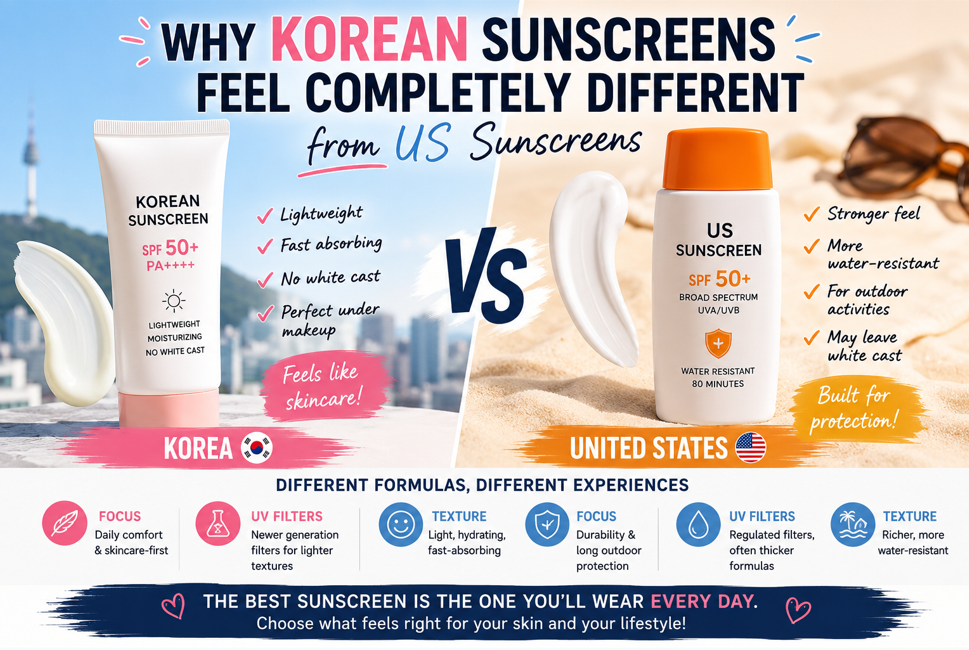
Why Korean Sunscreens Feel Completely Different from US Sunscreens
The first time I tried a Korean sunscreen, I honestly thought I had forgotten to apply it. It absorbed within seconds, didn’t leave a sticky feeling, and my skin felt more like it was wearing a lightweight moisturizer than sunscreen. That experience made me wonder why it felt so different from many sunscreens I had used in the United States.
The difference isn’t just marketing. Korean and US sunscreens are often developed under different regulations, technologies, and skincare philosophies.
Different Beauty Philosophies
One of the biggest differences is how sunscreen fits into a daily routine.
In Korea, sunscreen is considered an essential skincare step, much like applying moisturizer. Because people are expected to wear it every day, brands often focus on creating formulas that feel lightweight, comfortable, and easy to reapply.
In the United States, many sunscreens have traditionally been developed with outdoor activities in mind, such as sports, swimming, or long hours in direct sunlight. These products often prioritize durability and water resistance, which can create a heavier texture.
UV Filters Make a Difference
Another reason Korean sunscreens often feel lighter is the type of UV filters used.
Many Korean brands use newer-generation UV filters that provide broad-spectrum protection while allowing for thinner, smoother formulas.
In the United States, sunscreen ingredients are regulated differently, and some newer UV filters available in other countries have not been widely approved for use. As a result, many American sunscreens rely on older filters that can sometimes feel thicker or leave a white cast.
This doesn’t mean one country’s sunscreen is automatically better. Both are designed to help protect the skin from harmful UV rays when used correctly.
Texture and Finish
Many people notice these differences immediately.
Typical Korean sunscreens often feel:
- Lightweight
- Fast-absorbing
- Hydrating
- Comfortable under makeup
- Minimal white cast
Many traditional US sunscreens are more likely to be:
- Richer in texture
- More water-resistant
- Designed for extended outdoor activities
- Slightly heavier on the skin
Today, however, many American brands also offer lightweight daily formulas, so the gap is becoming smaller.
Which One Should You Choose?
The best sunscreen is the one you’ll actually wear every day.
A Korean sunscreen may be a great choice if you prefer:
- A lightweight finish
- Daily city wear
- Dry or dehydrated skin
- Makeup-friendly formulas
A US sunscreen may be a better option if you need:
- Water resistance
- Sports or beach activities
- Long outdoor exposure
- Frequent sweating
Some people even keep both and use them for different situations.
Frequently Asked Questions
Is Korean sunscreen safe?
Yes. Korean sunscreens are regulated before being sold and are widely used around the world.
Why doesn’t Korean sunscreen feel greasy?
Many formulas use lightweight emulsions and modern UV filters that help create a smooth, comfortable finish.
Can I use Korean sunscreen every day?
Yes. Most Korean sunscreens are specifically designed for everyday facial use.
Which sunscreen is better?
Neither is universally better. The best sunscreen is the one that fits your lifestyle, skin type, and that you’ll apply generously every day.
Conclusion
Korean sunscreens often feel different because they are designed with everyday comfort in mind. Lightweight textures, hydrating formulas, and elegant finishes have made them popular with skincare enthusiasts around the world.
Whether you choose a Korean or US sunscreen, the most important habit is wearing sunscreen consistently. Daily sun protection remains one of the simplest ways to support healthy-looking skin over time.