Complete Guide to Korean Toner Pads vs. Traditional American Toners: Which One Is Better?
If you have stepped into an Olive Young Global or a Sephora in Los Angeles recently, you have likely noticed a massive shift in the skincare aisle. The traditional bottle of liquid toner is sharing—and sometimes losing—its shelf space to stacks of circular plastic tubs filled with pre-soaked cotton sheets: Korean toner pads.
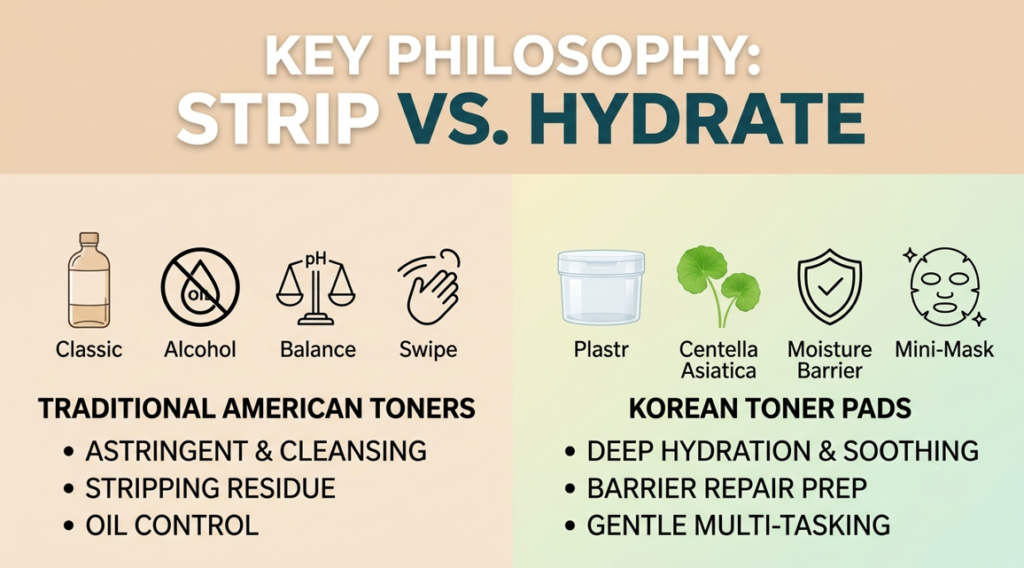
For decades, the American skincare routine treated toner as a harsh, astringent step designed to “strip” remaining dirt and oil after cleansing. K-Beauty, however, revolutionized this step by prioritizing deep hydration, skin barrier repair, and gentle prep. But when it comes to raw effectiveness, daily usability, and value for money, how do Korean toner pads stack up against traditional American liquid toners? Let’s break down the science, the application methods, and the honest results.
My Personal Experience: > Living in Southern California, my skin constantly battles two things: dry, low-humidity air and hard municipal tap water. When I relied solely on traditional American astringent toners, my skin barrier felt tight, stripped, and constantly irritated. Switching to Korean toner pads as a hybrid cooling mini-mask completely transformed my flakiness, especially under the hot LA sun.
What is the Difference Between Korean Toner Pads and American Toners?
To understand which is better, we must look at the formulation philosophy behind both products. The core difference lies in their primary goal: one aims to deeply hydrate and prep, while the other historically focused on deep cleansing and active chemical exfoliation.
1. Traditional American Toners: The Cleansing Astringent
Historically, Western and American toners were formulated to ensure the skin was “squeaky clean.” Many contained high percentages of alcohol, witch hazel, or strong Salicylic Acid. Their primary job was to act as a secondary cleanser to strip away stubborn oil and soap residue. While modern Western brands have evolved to include hydrating ingredients, the focus often remains heavily on active exfoliation, pH balancing, or intensive oil control.
2. Korean Toner Pads: The Gentle Multi-Tasker
K-Beauty treats toner as the crucial first step of hydration (often called the “skin” step in Korea). Korean toner pads are soft, medical-grade cotton pads pre-steeped in highly concentrated active essences. Rather than stripping the skin, they are packed with soothing botanical extracts like Centella Asiatica (Cica), Heartleaf, Snail Mucin, or Birch Sap. They offer a dual benefit: physical swipe-off exfoliation from the texture of the pad, and intensive chemical hydration from the essence.
Head-to-Head Comparison: Korean Toner Pads vs. Traditional American Toners
Here is a quick look at how these two giants compare across the key metrics that matter to your daily routine, budget, and skin health.
| Feature | Korean Toner Pads | Traditional American Toners |
| Primary Function | Instant hydration, soothing, cooling, and mild physical exfoliation. | pH balancing, pore tightening, deep cleansing, and active chemical exfoliation. |
| Application Method | Pre-soaked pad (wipe or leave on as a mini-sheet mask). | Poured onto hands and patted in, or applied with a separate cotton round. |
| Convenience | Extremely high. Perfect for busy mornings, post-gym, or travel. | Moderate. Requires a separate purchase of cotton pads if not patting in. |
| Active Ingredients | Centella (Cica), Heartleaf, Hyaluronic Acid, PHA, Panthenol. | Salicylic Acid (BHA), Glycolic Acid (AHA), Witch Hazel, Niacinamide. |
| Eco-Friendliness | Generates single-use pad waste (biodegradable options are increasing). | Zero pad waste if patted directly with hands; bottles last longer. |
| Cost Efficiency | Higher cost per use (usually 60–90 pads per tub). | Highly cost-effective; a single 200ml bottle can last 3–6 months. |
Skin Type Matchmaking: Which One Should You Choose?
There is no single “winner” in skincare—only what works for your specific skin barrier. Here is how to decide based on your skin type and lifestyle.
When to Choose Korean Toner Pads
- You have dehydrated, dry, or flaky skin: Leave-on pads act as a 3-minute targeted hydration mask for dry patches on your cheeks or forehead.
- You suffer from redness or sensitivity: Calming pads infused with Heartleaf or Mugwort instantly cool down skin heated by weather, friction, or irritation.
- You value morning efficiency: Swiping a pre-soaked pad takes 5 seconds and replaces both a morning cleanser (on dry mornings) and a toner.
When to Choose Traditional American Toners
- You have oily or severely acne-prone skin: A liquid toner containing 2% Salicylic Acid applied to oily zones is highly effective at keeping pores clear.
- You want maximum value for money: Liquid toners do not dry out in a tub and give you much more product for the price.
- You prefer a zero-waste routine: Pouring liquid toner directly onto your palms and pressing it into your face eliminates cotton pad waste completely.
The Ultimate SoCal Application Hack: “Toner Pad Masking”
If you decide to go the K-Beauty route, here is how local skincare enthusiasts in sunny, dry Los Angeles get the most out of their tubs. Because of the dry Santa Ana winds and high UV exposure, standard swiping isn’t enough.
- The Cooling Mask: Instead of swiping immediately, place one pad on each cheek and one on your forehead right after cleansing.
- Let It Sit: Leave them on for 3 to 5 minutes while you brush your teeth or style your hair. This allows the calming barrier ingredients (like Panthenol or Cica) to penetrate deeply.
- The Gentle Swipe: Gently swipe the pads outward along your skin texture to lift away dead skin flakes, then pat the remaining essence in.
Frequently Asked Questions (FAQ)
Q1: Can I use Korean toner pads every day?
Yes, most hydrating and soothing toner pads (containing Cica, Heartleaf, or Hyaluronic Acid) are formulated for daily use, both morning and night. However, if your pads contain exfoliating actives like BHA, LHA, or Glycolic Acid, limit use to 2–3 times a week to avoid over-exfoliation.
Q2: Do toner pads dry out in the container?
They can if the lid is not sealed tightly. Always ensure the inner lid or protective seal is closed after every use, and use the included plastic tweezers to maintain hygiene and prevent introducing bacteria into the tub.
Q3: Are traditional toners bad for my skin?
Absolutely not. Modern Western liquid toners have largely abandoned harsh denatured alcohols in favor of hydrating humectants and targeted acids. They are highly effective, especially when patted directly onto the skin with clean hands.