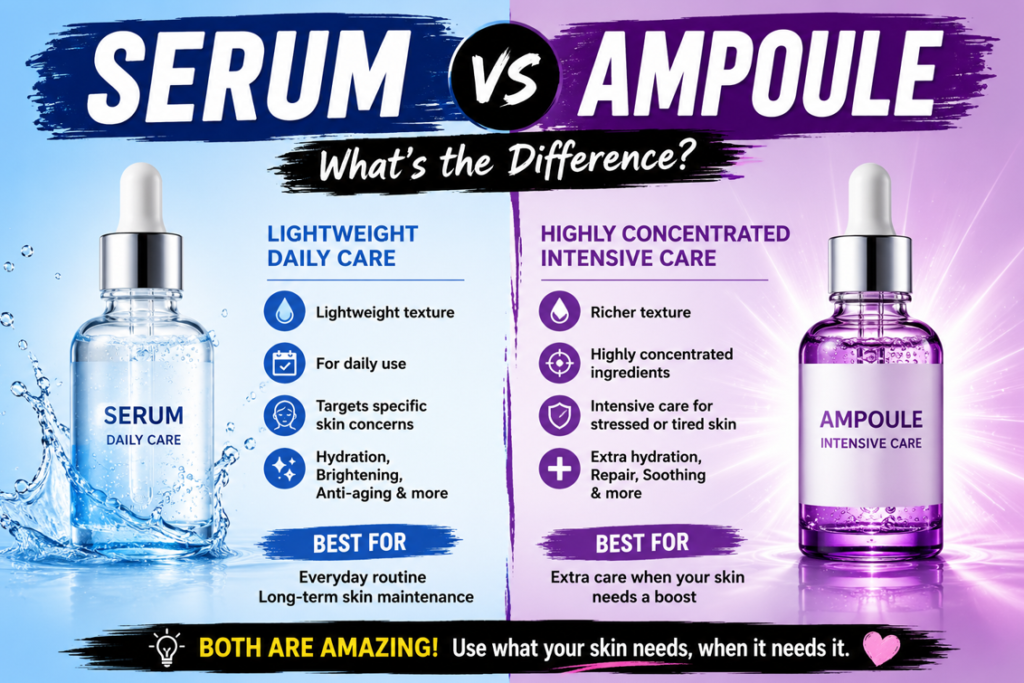
Serum vs. Ampoule: What’s the Difference?
When I first started building a Korean skincare routine, I thought serums and ampoules were basically the same product with different names. They came in similar bottles, had droppers, and both claimed to improve the skin.
Since I live in Los Angeles, where my skin often feels dehydrated because of the dry climate, I decided to try both. After using them for a while, I realized the difference wasn’t about which one was better. It was about when my skin needed extra care.
Most days, a serum was enough. But during the winter, after spending long hours outdoors, or whenever my skin felt unusually dry, an ampoule provided a richer boost of hydration.
What Is a Serum?
A serum is a lightweight treatment designed for daily use.
It contains concentrated ingredients that target specific skin concerns, such as:
- Hydration
- Brightening
- Fine lines
- Uneven skin tone
- Excess oil
Because serums absorb quickly, they fit easily into both morning and evening routines.
Best For
- Daily skincare
- Beginners
- Most skin types
- Long-term skin maintenance
What Is an Ampoule?
An ampoule is similar to a serum but is usually formulated with a higher concentration of beneficial ingredients.
It is often used when the skin needs extra attention, such as:
- Seasonal dryness
- Skin that feels stressed
- A weakened skin barrier
- Before a special event
- Recovery after environmental exposure
Many people think of an ampoule as an intensive treatment rather than an everyday necessity.
Serum vs. Ampoule
| Feature | Serum | Ampoule |
|---|---|---|
| Texture | Lightweight | Slightly richer |
| Concentration | High | Usually higher |
| Daily Use | Yes | Yes or as needed |
| Main Purpose | Daily maintenance | Intensive care |
| Best For | Everyday routine | Extra hydration and repair |
Which One Should You Choose?
Choose a serum if you:
- Are new to Korean skincare
- Want a simple routine
- Have one main skin concern
- Prefer lightweight products
Choose an ampoule if you:
- Have very dry skin
- Need extra hydration
- Feel your skin looks tired or stressed
- Want an intensive treatment for a short period
Many Korean skincare enthusiasts keep both and switch depending on how their skin feels.
How I Use Them
Most mornings, my routine looks like this:
- Gentle Cleanser
- Toner
- Serum
- Moisturizer
- Sunscreen
If my skin feels especially dry, I replace the serum with an ampoule in the evening or apply the ampoule after my serum for extra nourishment.
Keeping the routine flexible has worked better for me than using the same products every single day.
Common Mistakes
Avoid these common mistakes:
- Using too many treatment products at once.
- Assuming ampoules are always better than serums.
- Applying more product than needed.
- Skipping moisturizer afterward.
- Expecting overnight results.
Healthy-looking skin usually comes from consistency, not from stronger products.
Frequently Asked Questions
Can I use a serum and an ampoule together?
Yes. Many people apply a serum first, followed by an ampoule when their skin needs extra care.
Is an ampoule better than a serum?
Not necessarily. A serum is excellent for daily maintenance, while an ampoule provides more intensive support when needed.
Can I use an ampoule every day?
Yes. Many ampoules are gentle enough for daily use, but some people prefer using them only when their skin feels dry or stressed.
Which is better for beginners?
A serum is usually the better starting point because it’s designed for everyday use and fits easily into a simple skincare routine.
Conclusion
At first, I thought choosing between a serum and an ampoule would make a huge difference. After trying both, I realized they each have their place.
A serum has become my everyday essential because it’s lightweight and easy to use. An ampoule is something I reach for when my skin needs extra support, especially during dry Los Angeles weather.
Instead of wondering which product is better, think about what your skin needs today. Sometimes, the simplest routine is also the most effective.