Morning vs. Night Skincare Routine: What’s the Difference?
Many people wonder if they really need two different skincare routines. When I first became interested in Korean skincare, I used the same products in the morning and at night because it seemed easier. After learning more about how skincare products work, I realized that morning and evening routines have different purposes.
Your skin faces environmental stress during the day and repairs itself while you sleep. That is why your skincare routine should change depending on the time of day.
Morning Skincare Routine
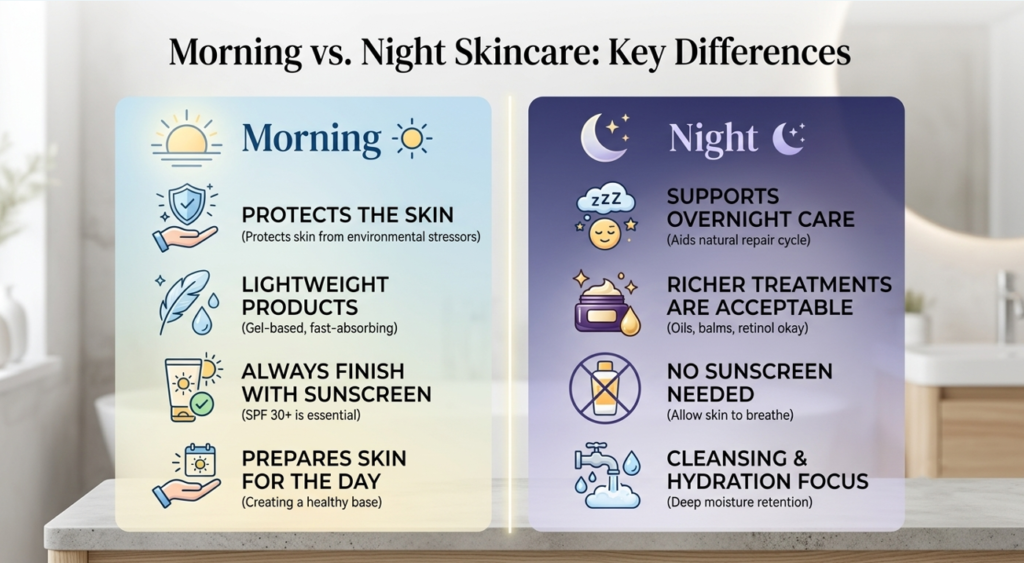
The goal of a morning routine is to protect your skin from daily environmental factors such as sunlight, pollution, and excess oil.
A simple morning routine includes:
- Gentle Cleanser
- Hydrating Toner
- Serum (optional)
- Moisturizer
- Sunscreen
Many people enjoy using lightweight products in the morning because they absorb quickly and work well under makeup. If your skin feels dry, adding a hydrating serum can provide extra moisture without making your routine feel heavy.
The most important step is sunscreen. Daily sun protection helps reduce the effects of UV exposure and supports long-term skin health.
Night Skincare Routine
Your evening routine focuses on cleansing and recovery.
After a full day, sunscreen, oil, and dirt should be removed before applying skincare products.
A typical night routine includes:
- Oil Cleanser (if wearing sunscreen or makeup)
- Water-Based Cleanser
- Toner
- Treatment Serum
- Moisturizer
This is also the best time to use products containing ingredients such as retinol, exfoliating acids, or richer moisturizers because your skin is not exposed to sunlight while you sleep.
Morning vs. Night: Key Differences
Do You Need Different Products?
Not always.
Many products, such as cleansers, toners, and moisturizers, can be used both morning and night.
However, sunscreen is only needed during the day, while stronger treatment products are often better suited for evening use. Keeping your routine simple makes it easier to stay consistent.
Common Mistakes
Avoid these common skincare mistakes:
- Skipping sunscreen in the morning.
- Sleeping without removing sunscreen or makeup.
- Using too many active ingredients at once.
- Changing products too frequently.
- Expecting immediate results.
Healthy-looking skin usually comes from consistency rather than using more products.
Frequently Asked Questions
Should I wash my face twice a day?
For most people, cleansing in the morning and before bed helps remove oil, dirt, and sunscreen. Choose a gentle cleanser that matches your skin type.
Can I use the same moisturizer morning and night?
Yes. If it works well for your skin, the same moisturizer can often be used both morning and evening.
Is sunscreen necessary if I stay indoors?
UV rays can still reach your skin through windows, and short periods outside also contribute to sun exposure. Many dermatologists recommend daily sunscreen as part of a regular skincare routine.
What is the most important nighttime step?
Removing sunscreen and makeup before bed is one of the most important habits for maintaining healthy-looking skin.
Conclusion
Morning and night skincare routines are not about using more products. They are about giving your skin what it needs at the right time. In the morning, focus on protection. At night, focus on cleansing, hydration, and recovery. Even a simple routine followed consistently can make a noticeable difference over time.
FAQ
Q: What is the difference between a morning and night skincare routine?
A: A morning routine focuses on protecting the skin with hydration and sunscreen, while a nighttime routine focuses on cleansing and supporting the skin overnight.
Q: Do I need different skincare products for morning and night?
A: Not necessarily. Many products can be used twice a day, but sunscreen is essential in the morning, while treatment products are often better used at night.
Q: Is sunscreen the most important morning skincare step?
A: Yes. Daily sunscreen helps protect the skin from UV exposure and supports long-term skin health.