Peptides in Korean Skincare: What Beginners Should Know
If you have been keeping up with global skincare trends, you have likely noticed that peptides are having a major moment. Once considered an obscure anti-aging ingredient found only in luxury creams, peptides have now become a staple in everyday routines—largely thanks to the innovation of Korean skincare (K-Beauty).
Unlike harsh exfoliants or intense retinoids that can irritate the skin barrier, peptides offer a gentler, barrier-friendly way to boost elasticity and hydration. If you are new to peptides and want to incorporate them into your K-Beauty routine, here is everything you need to know.
What Exactly Are Peptides?
To put it simply, peptides are short chains of amino acids—the fundamental building blocks of proteins like collagen, elastin, and keratin. These proteins are responsible for giving your skin its firm structure, elasticity, and youthful bounce.
As we age, natural collagen production slows down by about 1% every year. This gradual decline leads to fine lines, loss of firmness, and dehydration.
When applied topically, peptides act as cellular “messengers”. They send signals to your skin cells, tricking them into thinking collagen has broken down, which encourages the skin to produce fresh collagen and repair itself.
Why Is K-Beauty Obsessed with Peptides?
While Western skincare often focuses on strong active ingredients that resurface the skin quickly (sometimes at the cost of barrier irritation), Korean skincare prioritizes prevention, hydration, and long-term skin barrier health.
Here is why peptides fit perfectly into the K-Beauty philosophy:
- Gentle and Non-Irritating: Peptides do not cause peeling, redness, or photosensitivity. They are suitable for virtually all skin types, including sensitive and acne-prone skin.
- Synergistic Formulations: Korean cosmetics excel at combining peptides with soothing, barrier-supportive ingredients like Centella Asiatica, hyaluronic acid, ceramides, and fermented extracts.
- Lightweight Textures: K-Beauty peptide products range from watery essences and jelly mists to hydrating ampoules, allowing easy layering without feeling heavy or greasy.
The 4 Main Types of Peptides to Look For
When reading ingredient lists, peptide names can sound intimidatingly technical. Knowing the basic categories helps you choose the right product for your skin goals:
1. Signal Peptides
- How They Work: They instruct skin cells to synthesize more collagen, elastin, and structural proteins.
- Best For: Improving firmness and smoothing out fine lines.
- Common Examples: Palmitoyl Tripeptide-1, Palmitoyl Pentapeptide-4.
2. Carrier Peptides
- How They Work: They deliver trace minerals (like copper or manganese) directly into the deeper layers of the skin to assist with tissue repair and wound healing.
- Best For: Repairing a damaged skin barrier and boosting skin recovery.
- Common Example: Copper Tripeptide-1.
3. Neurotransmitter Inhibitor Peptides
- How They Work: Often referred to as “Botox in a bottle,” these peptides block the signals that cause facial muscles to contract, softening expression lines.
- Best For: Dynamic wrinkles around the eyes and forehead.
- Common Example: Acetyl Hexapeptide-8 (Argireline).
4. Enzyme Inhibitor Peptides
- How They Work: They prevent natural enzymes from breaking down the collagen and elastin your skin already has.
- Best For: Preserving youthful skin density and preventative anti-aging care.
How to Layer Peptides in a K-Beauty Routine
Integrating peptides into your daily routine is simple because they layer seamlessly with most other products.
- Cleanser: Start with a gentle water-based or double-cleansing routine.
- Toner/Essence: Apply a hydrating toner or peptide-boosting essence to damp skin.
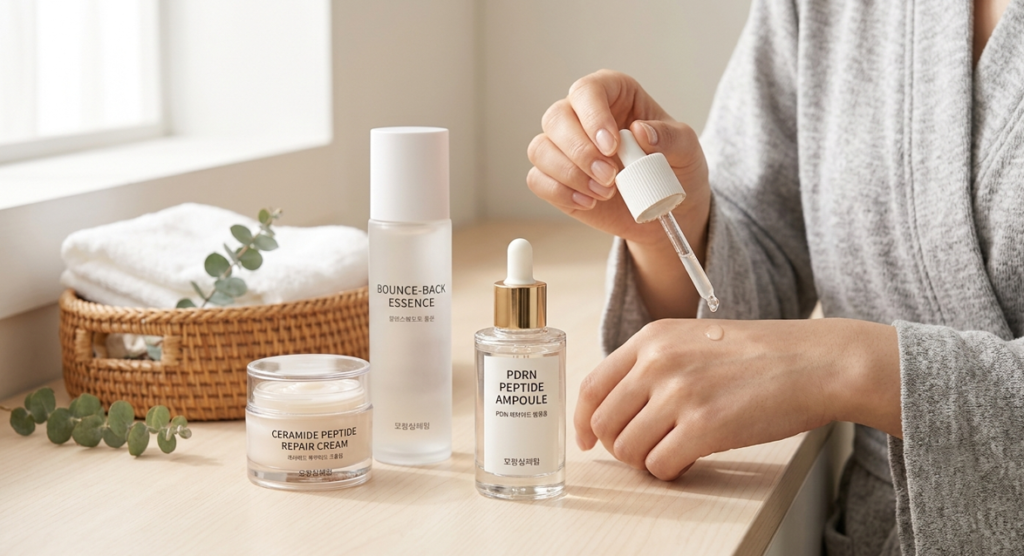
- Peptide Serum / Ampoule: Pat 2–3 drops of your peptide serum gently onto your face and neck.
- Moisturizer: Seal in the active ingredients with a hydrating cream or night mask.
- Sunscreen (AM): Always finish with broad-spectrum SPF during the daytime to protect new collagen from UV degradation.
Pro Tip: Peptides work best with consistent, twice-daily use. Expect to see visible improvements in skin texture and plumpness after 4 to 6 weeks.
Ingredients to Pair (and Avoid) with Peptides
Best Ingredients to Pair With:
- Hyaluronic Acid & Ceramides: Excellent for maximum hydration and moisture-barrier reinforcement.
- Niacinamide: Great for brightening and improving overall skin texture alongside peptides.
- PDRN & Growth Factors: A popular modern K-Beauty combination that accelerates cell renewal and skin density.
What to Be Cautious About:
- Direct AHAs/BHAs (Strong Acids): High levels of glycolic, salicylic, or lactic acids can break down certain peptide bonds through hydrolysis if mixed directly. Use your exfoliant in the evening and your peptides in the morning, or alternate days.
- Pure Vitamin C (L-Ascorbic Acid): Highly acidic formulas may degrade peptide effectiveness. Use Vitamin C in the AM and Peptides in the PM for the best results.
Final Thoughts for Beginners
Peptides are not a overnight miracle, but they are one of the most reliable, research-backed ingredients for long-term skin health. If you want a smooth, plump, and healthy complexion without risking barrier damage, adding a K-Beauty peptide product to your daily regimen is a smart, effective step forward.